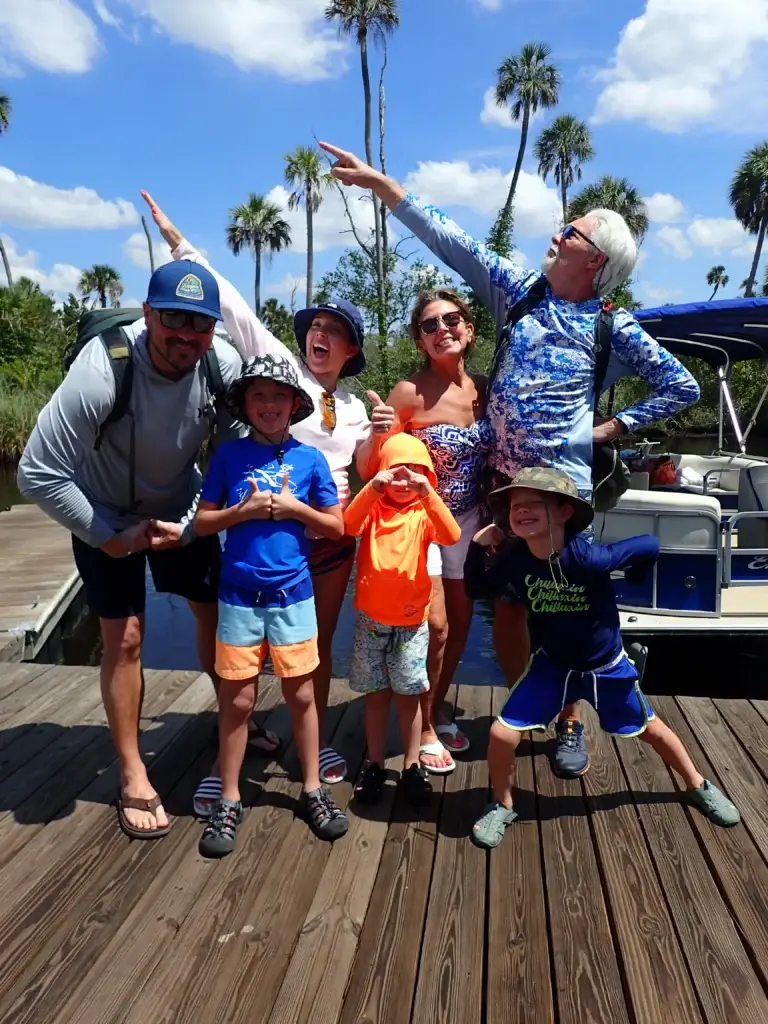
Most people come to Homosassa for the manatees, then realize the morning swim leaves a whole day open. This small river town on Florida’s Nature Coast, in Citrus County just south of Crystal River, packs a lot into a short drive: two state parks, a river with its own island of monkeys, a national wildlife refuge built for paddlers, and Gulf water where people go scalloping every summer.
Here’s what to do in and around Homosassa, with the details the official sources publish so you can plan.
TL;DR
- Ellie Schiller Homosassa Springs Wildlife State Park offers an underwater observatory with manatees and a wildlife walk of native Florida animals. Swimming isn’t allowed.
- Yulee Sugar Mill Ruins Historic State Park is free and open every day.
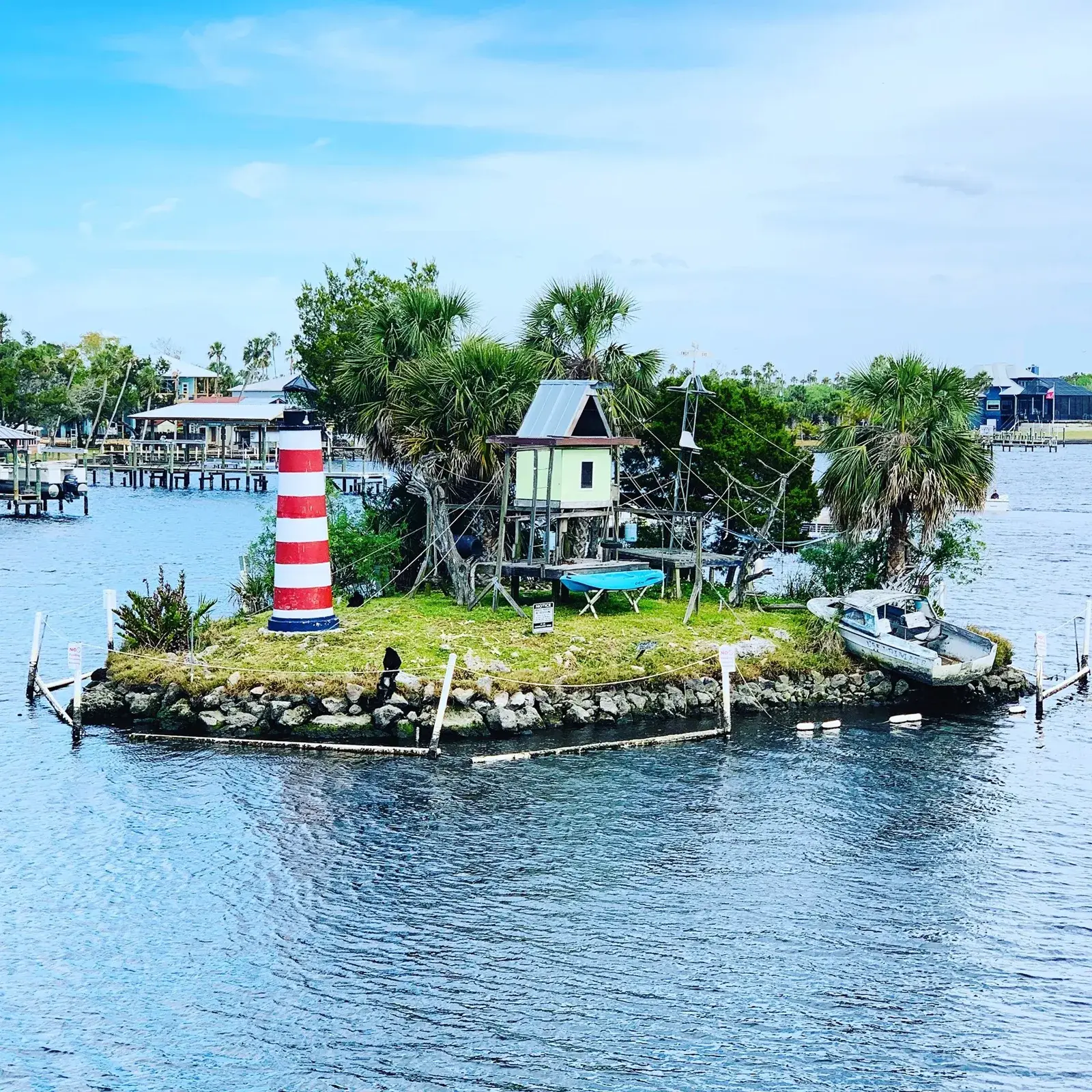
- Monkey Island, home to a group of spider monkeys, sits in the Homosassa River and can be seen from the shore and the resort waterfront.
- Chassahowitzka National Wildlife Refuge is mostly reached by boat or kayak and protects about 31,000 acres of bays, estuaries and marsh.
- Bay scallop season in Citrus County waters ran July 1 to September 24 in 2026, according to the Florida Fish and Wildlife Conservation Commission (FWC).
Swim with manatees on the Homosassa River
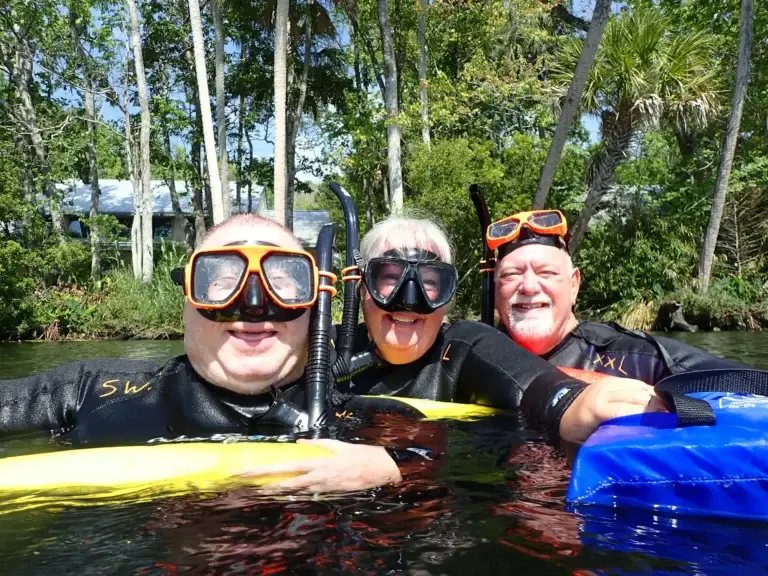
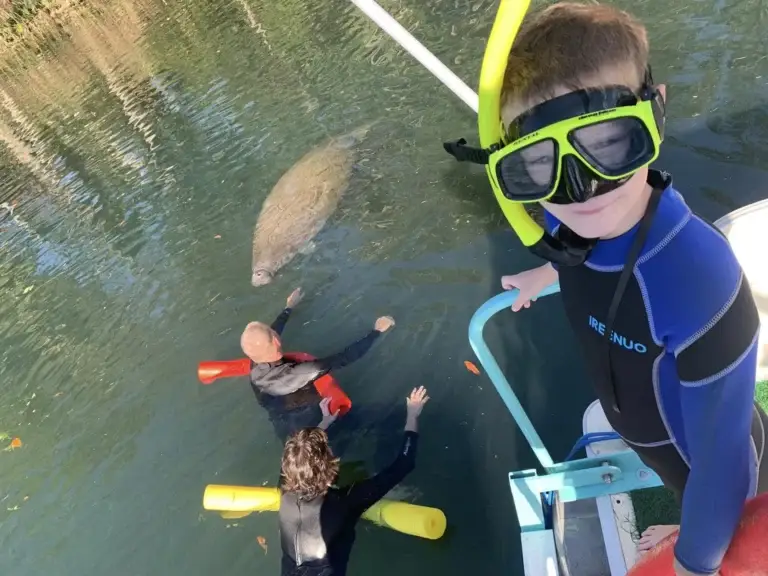
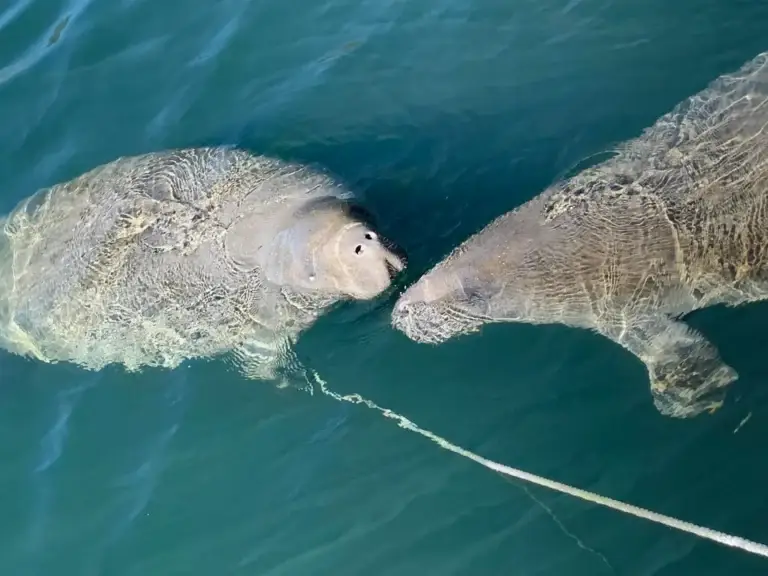
The reason many visitors come. Swimming with manatees in Homosassa is a guided, passive encounter: you float at the surface with a mask and snorkel and let curious manatees come to you. Manatees gather on the river in the largest numbers in the cooler months, roughly mid-October to April, and resident manatees stay all year.
Swim With Manatees, a small-group manatee snorkel tour company that has run tours on the Homosassa River since 2000, departs from its private docks at Monkey Island Riverside Resort and limits its boats to six guests. For how the day works, see What to Expect on your manatee tour.
Ellie Schiller Homosassa Springs Wildlife State Park
The town’s best-known attraction is a state park built around the first-magnitude spring at the head of the Homosassa River. Its Fish Bowl Underwater Observatory floats in the main spring so visitors can watch fish and manatees from below the surface, and its 1.1-mile Wildlife Walk passes native animals, including the endangered Florida panther, red wolf and whooping crane, plus black bears and alligators. Manatee programs run daily at 11 a.m. and 1 p.m.; confirm the schedule when you arrive.
Admission is $13 for ages 13 and up and $5 for ages 6 to 12 (checked October 2026). Swimming isn’t permitted. For the full rundown, see our Homosassa Springs State Park guide.
Yulee Sugar Mill Ruins Historic State Park
A short stop with a lot of history. Yulee Sugar Mill Ruins Historic State Park preserves what remains of a steam-driven mill that processed sugarcane into syrup, molasses and rum, including a 40-foot limestone masonry chimney, iron gears and a cane press. The plantation belonged to David Levy Yulee and, as Florida State Parks notes, was operated with the labor of enslaved people. There’s no entry fee, and the park is open 8 a.m. to sunset every day.
Monkey Island
In the middle of the Homosassa River sits Monkey Island, an island created in the early 1960s and later home to a group of spider monkeys. According to the Monkey Island Riverside Resort, it was created by G.A. “Furgy” Furgason while addressing a navigational hazard in the river, and he added a lighthouse and, later, the monkeys. Visitors watch the monkeys from the shore or from the resort’s waterfront dining areas, and Swim With Manatees’ tours leave from the same resort, so guests can keep an eye out for them on the way.
Paddle the Chassahowitzka National Wildlife Refuge
Just south of Homosassa, Chassahowitzka National Wildlife Refuge protects about 31,000 acres of bays, estuaries and brackish marsh. The U.S. Fish and Wildlife Service says the refuge is primarily accessible by boat and that visitors “can paddle the calm, quiet Chassahowitzka River to view crystal clear springs.” The refuge begins about three miles downriver from the county’s Chassahowitzka Boat Ramp at the end of State Road 480. On land, the refuge’s Salt Marsh Trails off Mason Creek Road in Homosassa include an observation tower and are open sunrise to sunset.
Go scalloping in summer
Each summer, the shallow grass flats off Citrus County become one of Florida’s bay scallop destinations. In 2026, FWC’s season for Levy, Citrus and Hernando counties, which includes Crystal River and Homosassa, ran July 1 through September 24. Dates and bag limits can change each year, so check FWC’s bay scallop page before you plan a trip.
Get on the water yourself
For boaters and kayakers, Citrus County’s MacRae’s Boat Ramp sits on South Cherokee Way in Homosassa, near Monkey Island Riverside Resort, and charges a launch fee. The county also runs ramps at Chassahowitzka and Mason Creek. Discover Crystal River, the county’s visitor bureau, describes Homosassa as a place “where fishing, scalloping, boating and paddling are a way of life.”
If you’d rather someone else drive the boat, Swim With Manatees also books a 2-hour Gulf of Mexico dolphin trip, an airboat ride and an eco river cruise past Monkey Island. See More Adventures for details.
Explore Crystal River, a few miles north
Three Sisters Springs
Three Sisters Springs is part of the Crystal River National Wildlife Refuge. On land, the City of Crystal River’s Three Sisters Springs Center manages access to the refuge’s boardwalk by shuttle, walk-in or bike, daily 8:30 a.m. to 4:30 p.m., with last admission at 3:30 p.m. Parts of the boardwalk have been under construction, so check before you go. Adult tickets are $20 from November 15 to March 31 and $12.50 the rest of the year. There’s no water access from the boardwalk. See our Three Sisters Springs guide for how in-water visits work.
Crystal River Archaeological State Park
Crystal River Archaeological State Park is a National Historic Landmark: a 61-acre pre-Columbian site with a six-mound complex that served as a ceremonial center for 1,600 years. Entry is $3 per vehicle.
Fort Island Gulf Beach
Citrus County’s Gulf beach west of Crystal River has white sand, a boardwalk and a fishing pier. Discover Crystal River reports the beach has reopened after hurricane damage but the boat ramp remains closed, and there are no lifeguards, so it’s swim at your own risk.
Day trips from Homosassa
- Weeki Wachee Springs State Park, to the south in Hernando County, is famous for its classic mermaid show. Admission is $13 for adults and $8 for ages 6 to 12.
- Rainbow Springs State Park, inland in Dunnellon, is known for swimming, canoeing, kayaking and tubing on the Rainbow River.
Where to eat and stay
The Monkey Bar at Monkey Island Riverside Resort serves stone-fired pizza and seafood on the river with a view of Monkey Island, and the resort’s rooms sit steps from the water. For more options, see Food and Lodging near the dock.
FAQ
What is Homosassa, Florida known for?
Homosassa is known for its spring-fed river and the manatees that gather there in winter, Ellie Schiller Homosassa Springs Wildlife State Park, Monkey Island, fishing and summer scallop season.
Can you swim in Homosassa Springs?
Not at the state park, where swimming isn’t permitted. Swimming with manatees in Homosassa happens on the Homosassa River with a guided tour.
How far is Homosassa from Crystal River?
Homosassa is just south of Crystal River in Citrus County, close enough that many visitors stay in one town and tour in the other.
When is scallop season in Homosassa?
In 2026, FWC’s bay scallop season for Citrus County, including Homosassa, ran July 1 through September 24. Check FWC for the current year’s dates.
The bottom line
Homosassa rewards a full day, or a long weekend: start with the manatees, then spend the afternoon at the springs, the sugar mill ruins or out on the water. In summer, add scalloping; in winter, add Three Sisters Springs. Check each site’s official page for current hours before you go.