Ellie Schiller Homosassa Springs Wildlife State Park is one of the few places in Florida where you can walk beneath the surface of a spring and look a manatee in the eye, any day of the year. It’s also one of the most misunderstood: a lot of visitors arrive with swimsuits, expecting to get in the water with the manatees, and find out at the gate that you can’t.
This guide covers what the park is, what you’ll see, what it costs, and where to go if you do want to swim with manatees in Homosassa.
TL;DR
- Ellie Schiller Homosassa Springs Wildlife State Park is a Florida state park in Homosassa, Citrus County, built around a first-magnitude spring and a wildlife walk of native Florida animals.
- You can’t swim there. The park’s concessionaire states that fishing and swimming are not permitted.
- The Fish Bowl Underwater Observatory floats in the main spring and gives an underwater view of fish and manatees.
- Admission is $13 for ages 13 and up, $5 for ages 6 to 12, and free for children 5 and under (checked October 2026).
- To swim with wild manatees nearby, visitors book a guided tour on the Homosassa River.
What is Homosassa Springs State Park?
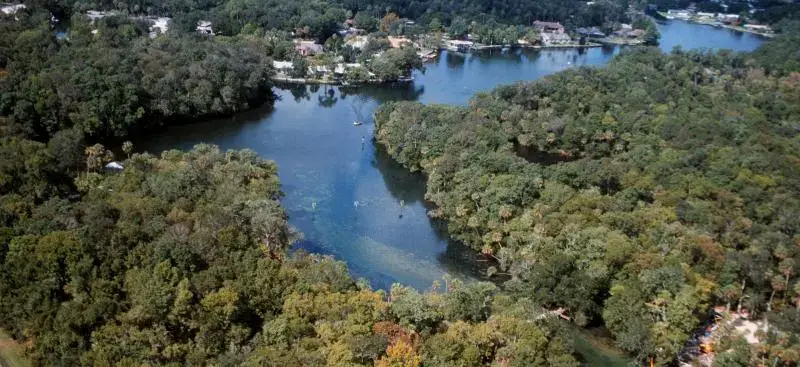
Ellie Schiller Homosassa Springs Wildlife State Park is a state park on the headwaters of the Homosassa River, at 4150 S. Suncoast Blvd. (U.S. 19) in Homosassa. Florida State Parks describes the Homosassa spring group as nearly 30 springs that together discharge about 65 million gallons of water a day, feeding a river that flows about 8 miles west to the Gulf.
The park is best known for its native wildlife. Florida State Parks lists the endangered Florida panther, red wolf, manatee and whooping crane, plus black bears, bobcats and alligators, many of them animals that can’t survive on their own in the wild. The 1.1-mile Wildlife Walk runs along elevated boardwalks between the habitats.
Can you swim at Homosassa Springs?
No. Guest Services, Inc., which runs concessions at the park, states that “fishing and swimming are not permitted at Homosassa Springs Wildlife State Park.” The main spring is home to the park’s resident manatees and, in winter, wild manatees seeking warm water, so it’s a look-don’t-swim spring.
If swimming with manatees is the goal, that happens on the Homosassa River outside the park, by boat with a licensed tour operator. More on that below.
The Fish Bowl Underwater Observatory
The park’s signature experience is the Fish Bowl Underwater Observatory, a floating structure in the main spring that lets visitors walk below the surface. Florida State Parks says it “allows an up-close view of the spring and the fish and manatees.” The spring’s three vents carry different amounts of salt, according to the park, which is why both freshwater and saltwater fish swim in the same basin.
Manatees at the park
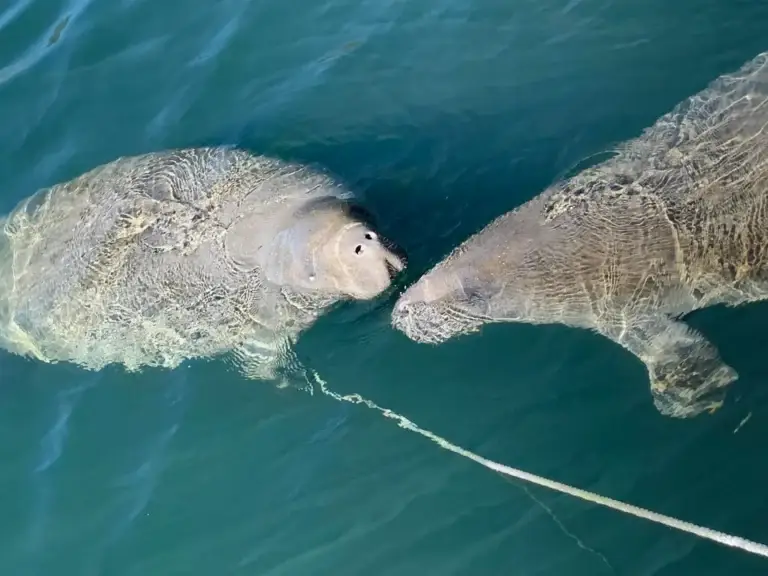
The park cares for non-releasable manatees, and Florida State Parks notes that the most common injuries come from boat strikes. It also takes part in the U.S. Fish and Wildlife Service manatee rescue program, caring for injured or ill manatees until they can be released.
Manatee programs, a 15 to 20 minute talk followed by a feeding of the park’s resident manatees, are offered daily at 11 a.m. and 1 p.m. and are free with admission. Park pages differ on the number of daily programs, so confirm the schedule when you arrive.
In winter, wild manatees also use the spring as a warm-water refuge. According to a 2023 Save the Manatee Club article by park staff, gates on the river are opened in mid-November to let wild manatees enter.
Hours, fees and getting around
| Detail | What the park publishes (checked October 2026) |
|---|---|
| Hours | 9 a.m. to 5:30 p.m. daily; ticket counters close at 4:45 p.m.; the Wildlife Walk closes at 5 p.m. |
| Admission | $13 ages 13 and up; $5 ages 6 to 12; free ages 5 and under |
| Address | 4150 S. Suncoast Blvd., Homosassa, FL 34446 |
| Main entrance | Visitor center on U.S. 19 |
| Swimming | Not permitted |
The visitor center and the main spring are connected by the Pepper Creek boat and by the 0.75-mile Pepper Creek Trail, which is paved and wheelchair accessible. As of February 4, 2026, the park reported its shuttle boat service unavailable because of low water levels, so plan on the trail and check the park’s alerts before you go.
A little history
Homosassa Springs has drawn visitors since the early 1900s, when passengers on the “Mullet Train” stopped to see the spring. It ran as a small private attraction from the 1940s, and in 1964 new owners expanded it with exotic animals. Citrus County voters approved buying the property on September 4, 1984, and it officially became a Florida state park on January 1, 1989, after which its focus shifted to native Florida wildlife.
The park’s most famous resident was Lu, a hippopotamus who arrived in 1964 and was named an honorary Florida citizen in 1991. Florida State Parks reports that Lu passed away on June 8, 2025, at age 65, as the oldest known hippopotamus in the world.
Visiting the park and swimming with manatees in one day
The state park and an in-water manatee tour make a good pair: the park gives you the underwater view and the wildlife walk, and a tour puts you in the river with wild manatees.
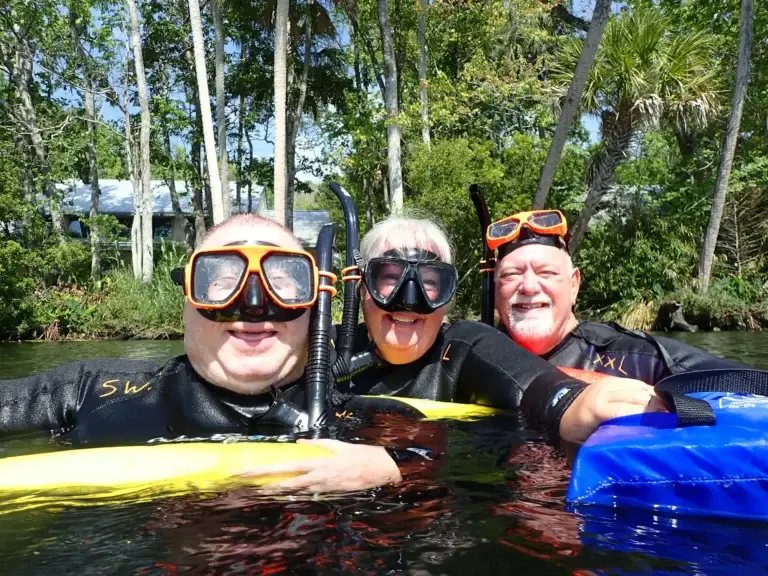
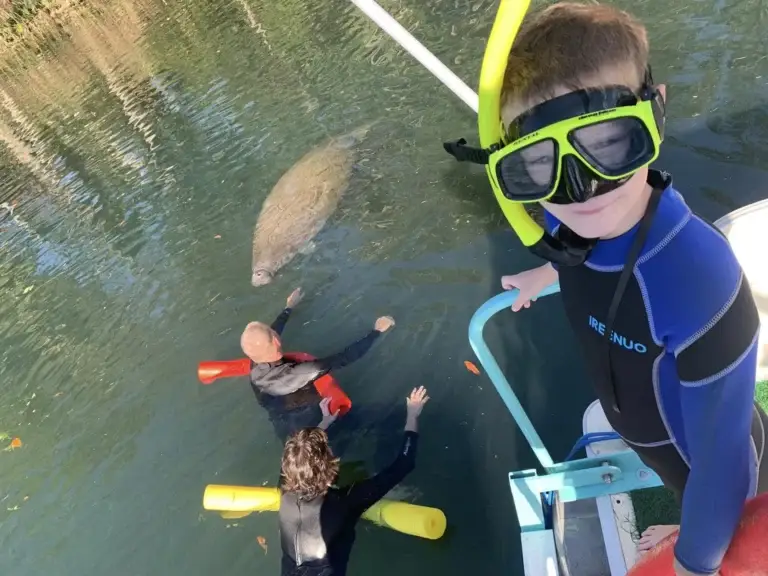
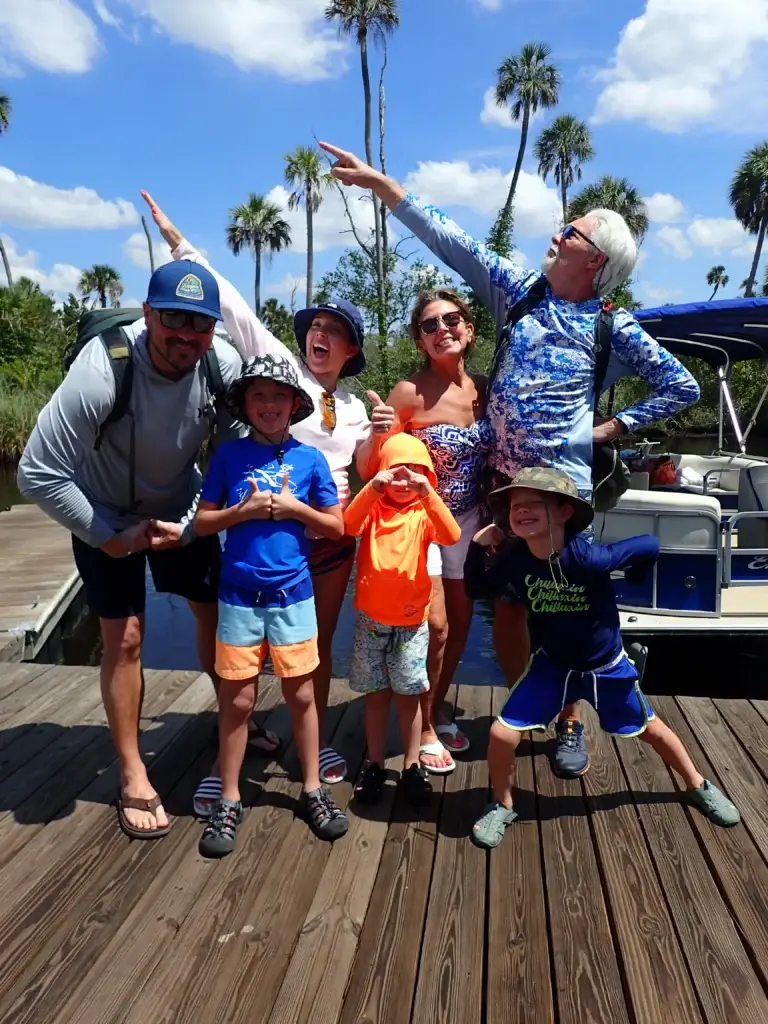
Swim With Manatees, a small-group manatee snorkel tour company on the Homosassa River, runs its tours from its private docks at Monkey Island Riverside Resort, 5297 S Cherokee Way in Homosassa, a short drive from the park. Its boats carry no more than six guests, and its 3-hour tours depart in the morning and early afternoon, which leaves time to visit the park before or after. Wetsuit, mask, snorkel and a flotation noodle are included, and guests float quietly at the surface while manatees choose whether to come close.
Nearby
- Yulee Sugar Mill Ruins Historic State Park, a free state park in Homosassa preserving the remains of a 19th-century sugar mill
- Monkey Island, the small island in the Homosassa River home to a group of spider monkeys, visible from the shore and the waterfront at Monkey Island Riverside Resort
- Three Sisters Springs in Crystal River, part of the Crystal River National Wildlife Refuge
For more ideas, see our guide to things to do in Homosassa.
FAQ
Can you swim with the manatees at Homosassa Springs State Park?
No. Swimming isn’t permitted at Ellie Schiller Homosassa Springs Wildlife State Park. To swim with wild manatees in Homosassa, book a guided tour on the Homosassa River.
How much does Homosassa Springs State Park cost?
Admission is $13 for ages 13 and older, $5 for ages 6 to 12, and free for children 5 and under, according to Florida State Parks (checked October 2026).
Are there manatees at Homosassa Springs all year?
Yes. The park cares for resident manatees that can’t be released, and wild manatees also enter the spring in the cooler months.
How long does it take to see Homosassa Springs State Park?
Plan enough time to walk the 1.1-mile Wildlife Walk, visit the Fish Bowl and catch a manatee program at 11 a.m. or 1 p.m. While the Pepper Creek boat is suspended, add the 0.75-mile walk each way between the visitor center and the spring.
The bottom line
Ellie Schiller Homosassa Springs Wildlife State Park is the place to see manatees and native Florida wildlife up close without getting wet, every day of the year. Just leave the swimsuit in the car: swimming isn’t allowed. If you want to float beside a wild manatee too, pair the park with a small-group tour on the Homosassa River. See Swim With Manatees’ tours for times and prices.