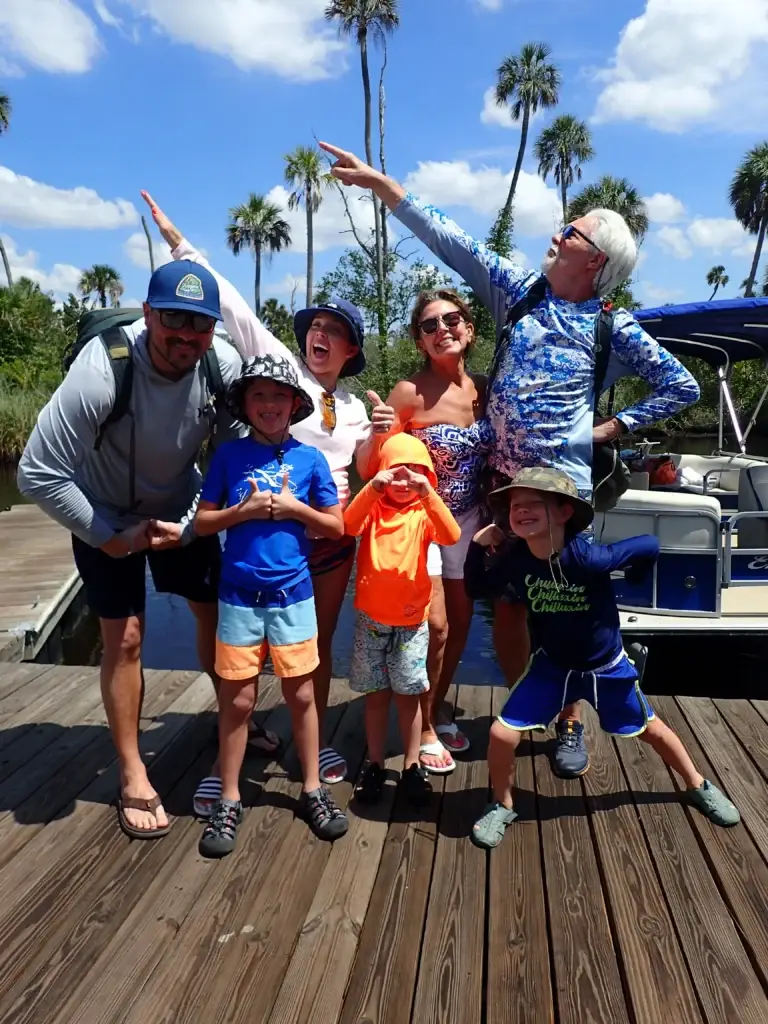
By Captain Gene Parker, owner, Swim With Manatees
Search for manatee tours online and you will find two very different stories. One shows families floating quietly beside a gentle giant. The other shows short clips of crowded water and swimmers reaching for an animal that is protected by federal law. Both are real, and the difference comes down to how each operation is run.
I have taken small groups onto the Homosassa River to meet wild manatees since 2000. This is my honest answer to the question, including the parts critics get right.
TL;DR
• A manatee swim is ethical when the manatee controls the encounter: you float at the surface, keep your hands to yourself, and let the animal come and go.
• Florida manatees are protected under the Marine Mammal Protection Act and the Endangered Species Act, and Florida law adds its own protections.
• Conservation groups have raised fair concerns about crowding and harassment, and the answer is better-run swims with trained guides.
• Chasing, touching, cornering, feeding or separating a mother and calf is prohibited in Kings Bay and harmful anywhere.
• If you see a manatee being harassed, report it to FWC at 1-888-404-3922.
The honest answer: it depends on how the swim is run
Swimming with manatees is legal in a few Florida waters, and it is regulated closely. Conservation groups such as Save the Manatee Club argue against in-water encounters. Their concern is that manatees spend more time swimming and less time resting when swimmers are around, and that most contact happens because a person approaches the manatee rather than the other way around.
That concern deserves a straight answer. A swim that crowds a resting manatee, chases it for a photo, or lets guests reach out and touch it is harmful, and in many places it is illegal. A swim where a small group floats quietly at the surface, with a guide watching, is a different experience for the animal and for you.
So the useful question is this: what does a responsible swim look like, and how can you tell before you book?
What a responsible manatee swim looks like
Swim With Manatees is a small-group manatee snorkel tour company that departs from Homosassa, Florida, just south of Crystal River. Here is how we run every trip, and what you should expect from any operator you consider.
Small groups
We take a maximum of six guests per boat. Fewer people in the water means less pressure on the manatees and a calmer encounter for everyone.
Our boats could carry 10 to 15 people. We take six. Your captain stays with the group for the whole swim and gives every water instruction right from the boat.
A briefing before anyone gets wet
Your captain covers safety and manatee manners on the boat, before the swim. This is the most important part of the trip.
Every guest also watches a short Manatee Manners briefing filmed with the U.S. Fish and Wildlife Service. It covers the same rules you will find below.
Floating, never chasing
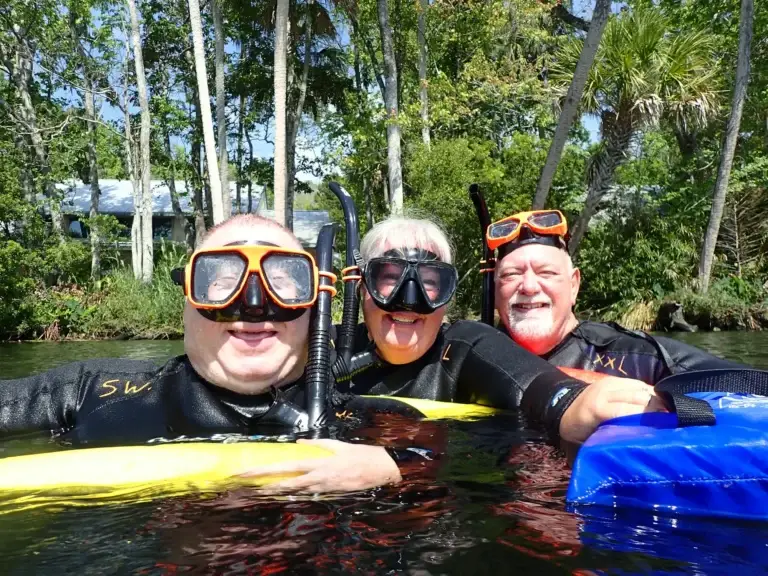
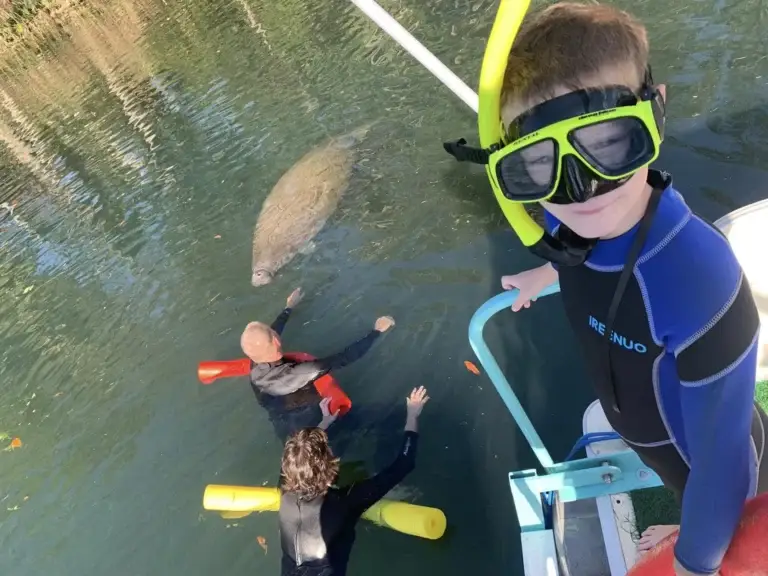
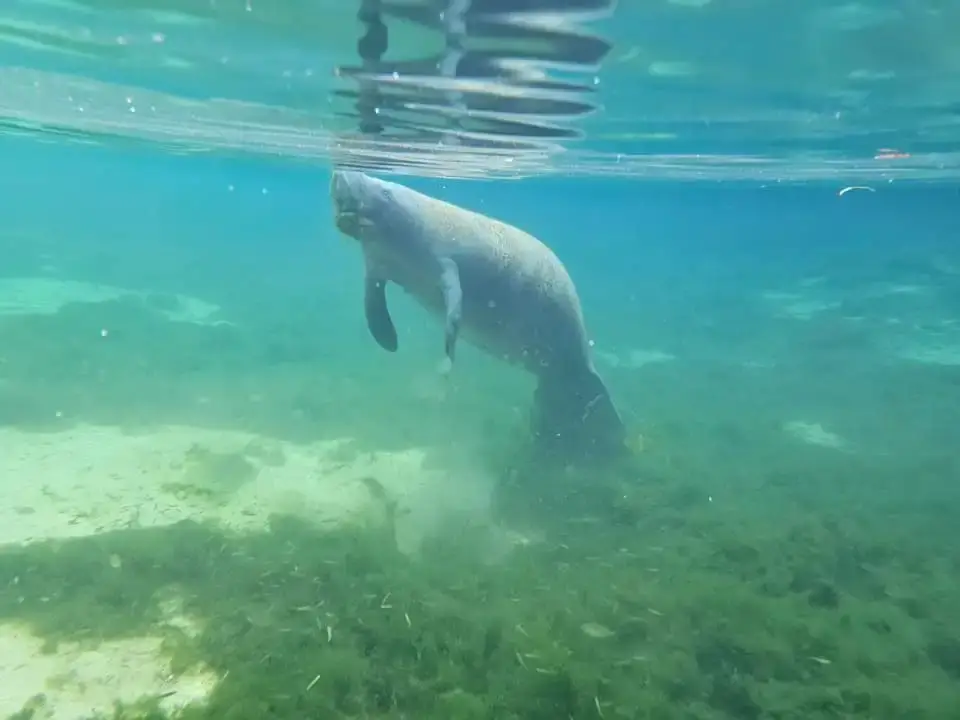
Guests float on the surface with a foam noodle and stay still. Nobody dives down, swims after a manatee, or surrounds one. When a manatee comes close, the guide keeps the group calm and in place.
Most guests spend 60 to 90 minutes in the water. Nobody is rushed, and you never need to be a strong swimmer: you stay on the surface the whole time.
Watch a full tour, uncut
Short clips can leave out what happened before and after the camera rolled. So here is a real tour, filmed by our photography team in October 2026 and posted with no edits. It runs about two and a half hours.
The rules every swimmer follows
Florida manatees are protected under federal law by the Marine Mammal Protection Act of 1972 and the Endangered Species Act of 1973. Florida's own rules define harassment as any act that disturbs a manatee enough to significantly interfere with its feeding, breeding or sheltering. In Kings Bay, the U.S. Fish and Wildlife Service spells out exactly what is prohibited. The same habits keep every manatee encounter safe, wherever you swim.
Do
• Float quietly at the surface
• Let the manatee choose to approach or leave
• Keep your hands to yourself
• Give mothers and calves extra room
• Stay outside posted sanctuary areas
• Bring only your camera
Avoid
• Diving down onto a manatee from the surface
• Chasing or following a manatee
• Touching a resting or feeding manatee
• Separating a mother and calf
• Cornering or surrounding a manatee
• Giving a manatee anything to eat or drink
Sources: U.S. Fish and Wildlife Service, Crystal River National Wildlife Refuge; Florida Fish and Wildlife Conservation Commission, manatee viewing guidelines; Florida Administrative Code, Chapter 68C-22.
In Kings Bay, federal manatee sanctuaries close to all people and boats from November 15 through March 31, giving manatees quiet warm water during the cold months.
What to do when a manatee comes close
Manatees are curious, and sometimes one will drift over to a calm swimmer. When that happens:
1. Stay still and keep floating.
2. Keep your hands close to your body.
3. Let the manatee decide how long to stay, and let it leave on its own.
4. Follow your guide's directions, including moving away if the guide asks.
Passive observation means the manatee controls the encounter. Your job is to be calm, quiet and easy to swim past.
Who else is on the water
Guided swim tours share Citrus County's rivers and springs with private boats, rental pontoons, kayaks, paddleboards and independent swimmers. Many of those visitors meet a manatee without any briefing at all.
A guided tour puts you with people who know the sanctuary lines, can spot a resting manatee, and will step in before a mistake happens. Everyone on the water, guided or on their own, shares the same rules and the same responsibility.
One standard for everyone on the water
Fair criticism makes the whole industry better. The standard we hold ourselves to is simple: complete footage when possible, a clear line between an allegation and a confirmed violation, and the same rules for tour boats, rental boats, private boats, paddlers, swimmers and photographers.
We publish every commitment we hold ourselves to on our Tour Standard page, along with the full uncut video.
How to report a problem
If you see a manatee being chased, touched or crowded, or you find one that is injured, sick, orphaned or dead, call the Florida Fish and Wildlife Conservation Commission Wildlife Alert line at 1-888-404-3922 (888-404-FWCC). Note the time, place and any boat registration numbers, and take photos or video if you can do so safely. Wildlife officers can review the full evidence and decide whether a violation occurred.
Why a good swim makes people protect manatees
Floating beside a manatee gives people a connection to an animal they may only have seen in photos. Many of our guests go home and start doing the small things that help:
• Respecting slow-speed and no-wake zones
• Picking up fishing line and plastic
• Reporting injured manatees
• Following sanctuary boundaries
• Teaching friends and family about passive observation
Frequently asked questions
Is it legal to swim with manatees in Florida?
Yes, in certain waters, as long as you follow passive observation rules. Touching, chasing, feeding or harassing a manatee is prohibited under federal and state law.
Can I touch a manatee?
No. Keep your hands to yourself, even if a manatee swims up to you. In Kings Bay, touching a resting or feeding manatee is specifically prohibited.
Are manatees still endangered?
Florida manatees were moved from endangered to threatened in 2017, and they remain protected under the Endangered Species Act and the Marine Mammal Protection Act. In January 2025 the U.S. Fish and Wildlife Service proposed keeping the Florida manatee listed as threatened.
How do I choose a responsible manatee tour?
Ask how many guests go on each boat, whether the crew watches the group for the whole swim, what the briefing covers, and how the crew handles a manatee that is resting. A good operator will answer all four without hesitating.
The bottom line
Swimming with manatees can be done responsibly, and it can be done badly. The difference is small groups, a real briefing, guides who step in, and swimmers who let the manatee make every choice. Ask your operator how they run their swims before you book, and watch a full tour if they have one.
If you would like to see how we do it, our small-group tours leave from Homosassa, just south of Crystal River, with six guests per boat. You can see our tours and check availability here.